
AdvertorialHome + yard
Why homeowners are putting a solar floodlight on every dark corner
Solar lights used to mean one dim puck by the steps. The new three-head floodlights light up a driveway, go up with four screws and never touch your power bill.
The Bunker team

Walk around your house after dark and count the spots you can't see: the side gate, the trash cans, the back step, the far end of the driveway. Most homes have three or four.
Lighting them used to mean an electrician, a trench or an extension cord. Here are five reasons more people now just screw a solar floodlight to the wall instead.
1No electrician, no wiring, no permit
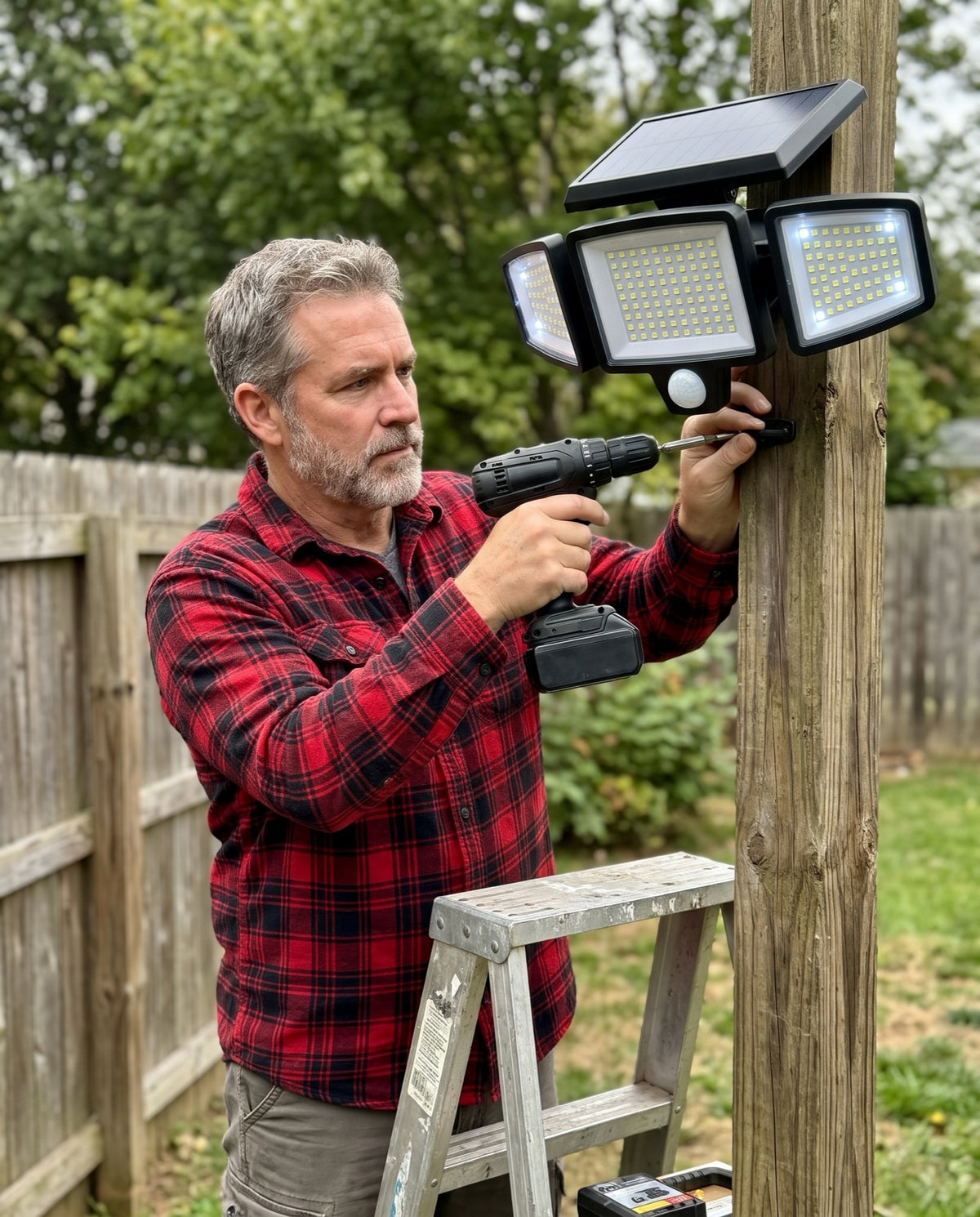
Adding a wired outdoor light usually means running power to the spot. A solar floodlight has its own battery and panel, so it goes anywhere the sun hits: four screws into wood, siding or brick, about 10 minutes, and you're done.
2The sun pays for the light
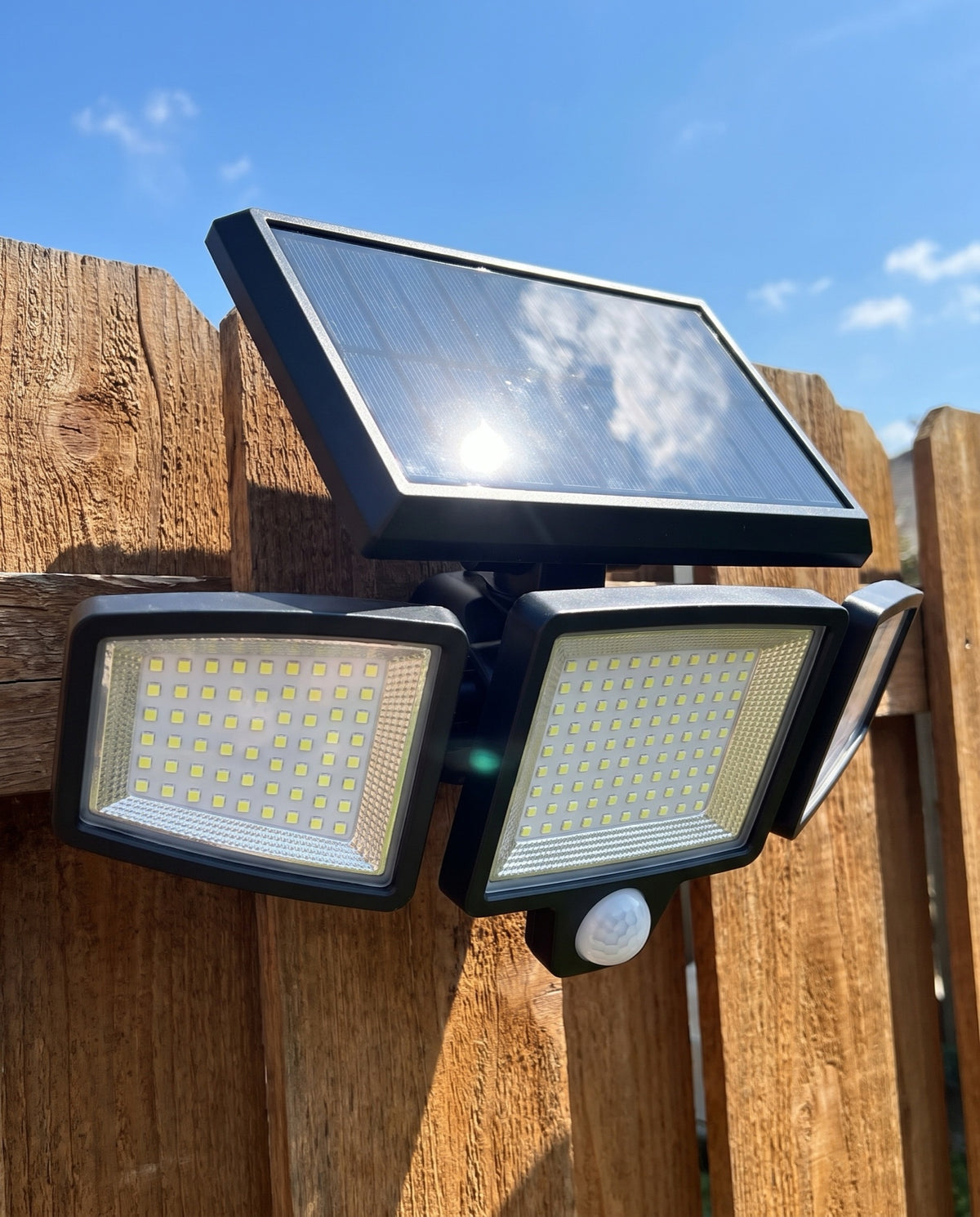
The panel on top charges the battery all day. At night it runs on that charge, so it never adds a line to your power bill. Tilt the panel toward the sun (south-facing is best) and leave it.
3It snaps on when something moves
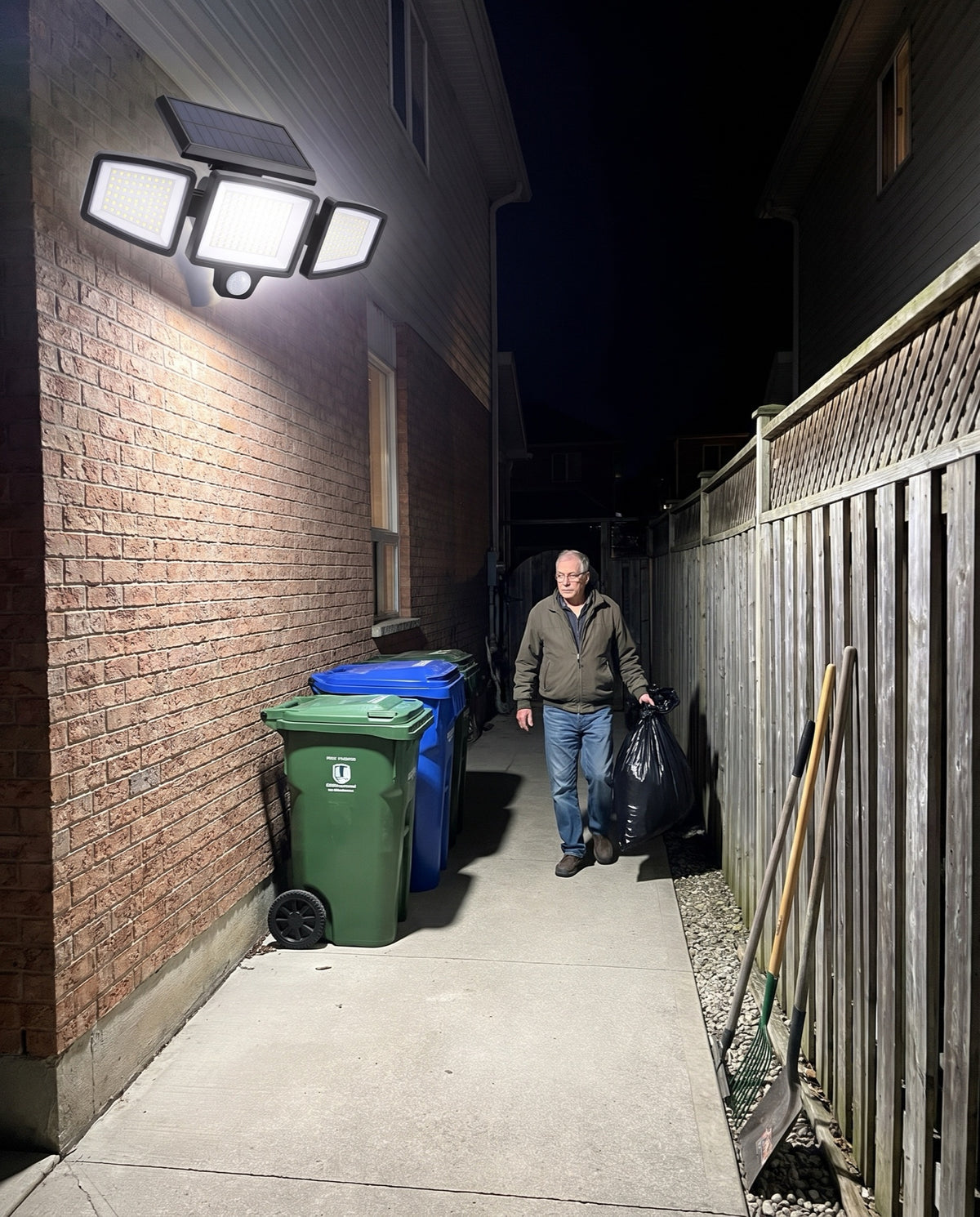
A motion sensor watches up to about 26 ft (manufacturer rating) for people, cars and animals. Taking out the trash, coming home late, or a noise by the gate: the light is on before you reach for your phone's flashlight.
4One light covers three directions
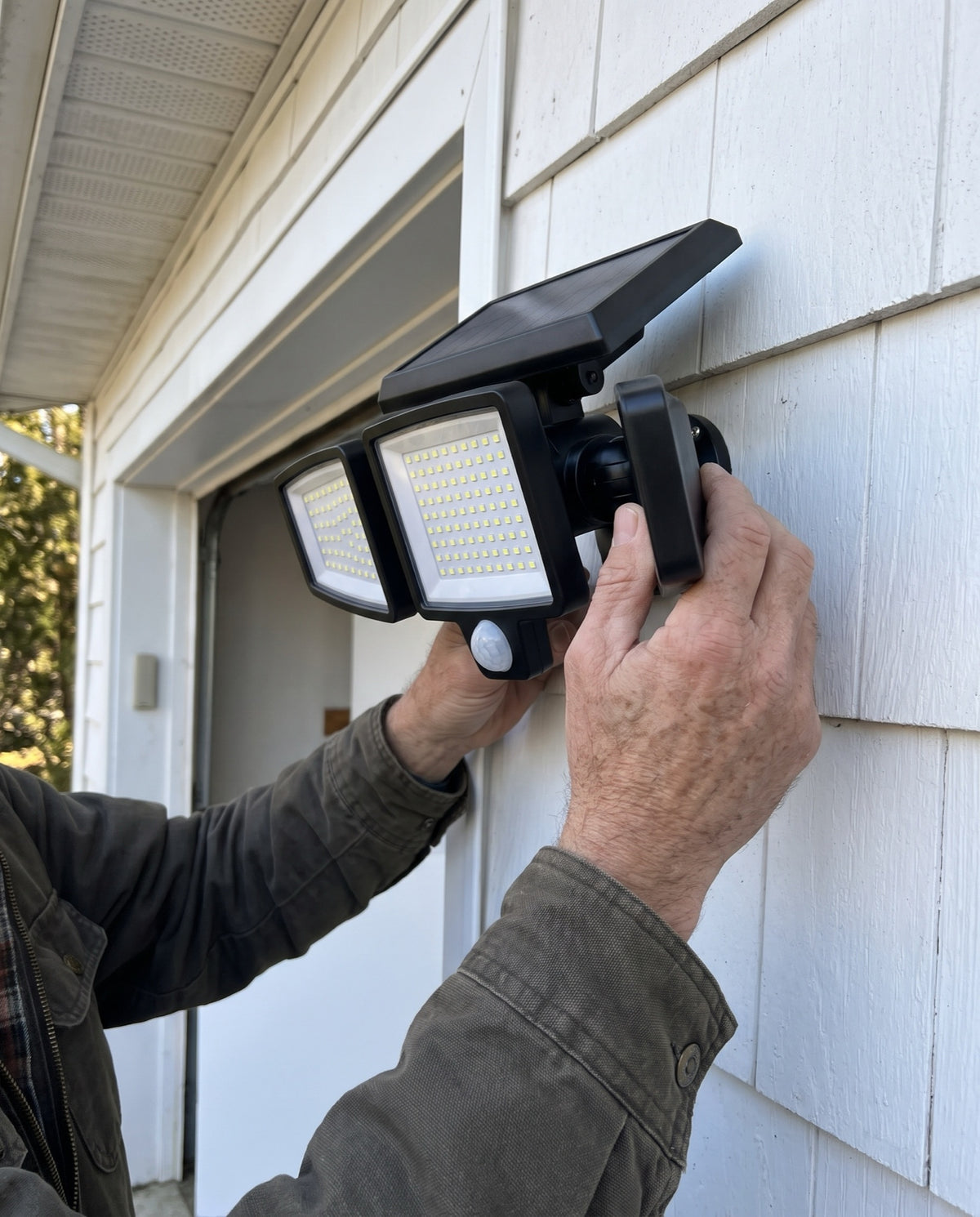
The Bunker floodlight has 210 LEDs on three heads. Swivel the side heads and one light covers the driveway and the walkway, or the back door and the yard, about 270° along the wall.
5It keeps working when the power goes out
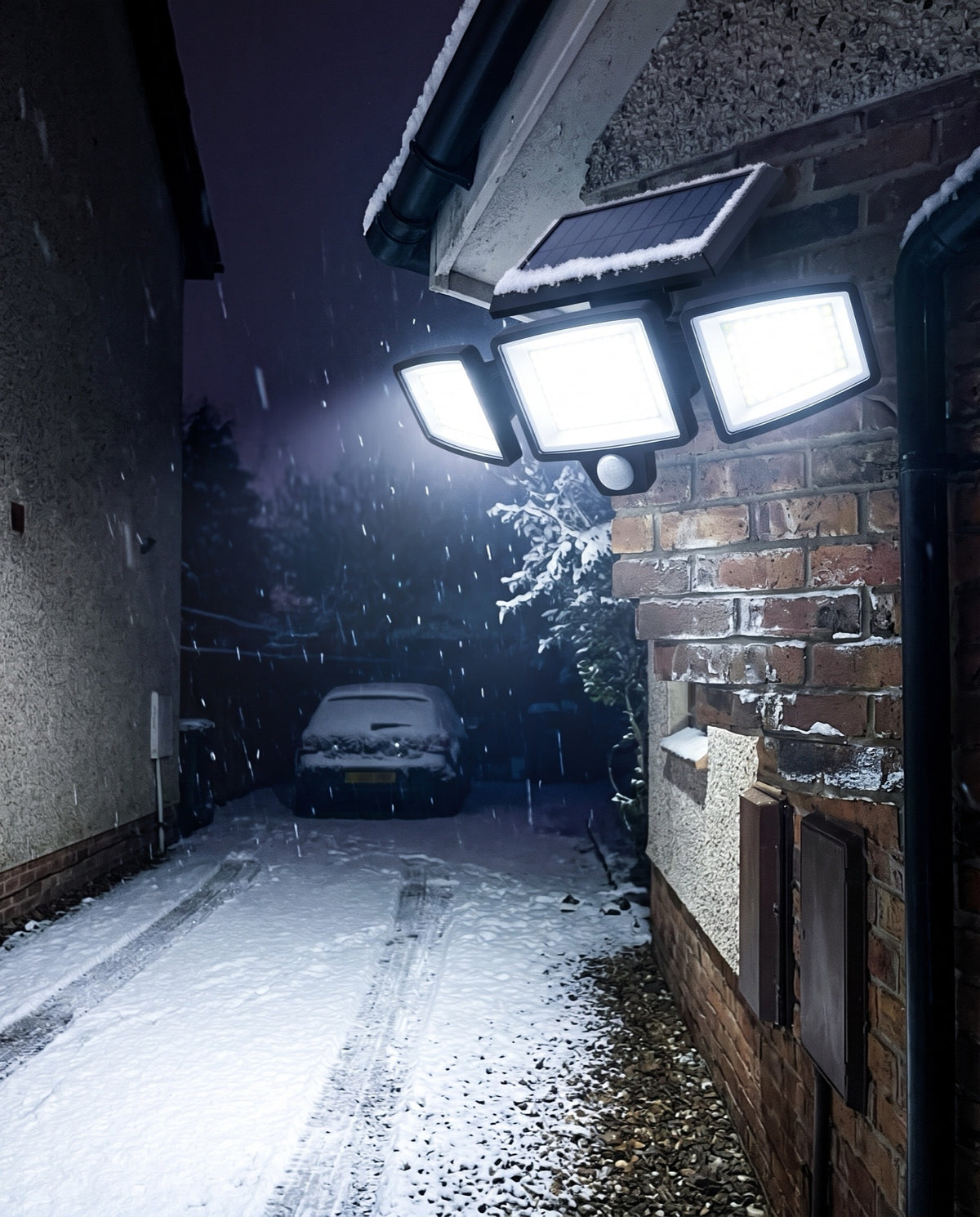
It never needed the grid, so an outage changes nothing. Rated IP65 for rain, snow and dust. You never know when the power goes out, and the yard is the last place you want to be in the dark.
Count your dark spots
- Front door: keys, packages, visitors
- Back door or deck: the dog's last trip out
- Driveway or garage: pulling in after dark
- Side gate and trash cans: the spot nobody lights
- Shed, barn or back fence: where there's no outlet at all
Most homes land on four. That's why the 4-pack is the one most people pick, at $24.99 a light.
Solar floodlight vs. a wired one
| Feature | Bunker solar | Wired floodlight |
|---|---|---|
| No electrician or wiring | Yes | No |
| No power bill | Yes | No |
| Works in a power outage | Yes | No |
| Motion sensor | Yes | Some |
| Remote with 3 modes | Yes | No |
| Goes on a shed or fence | Yes | No |
Free US shipping · 30-day returns
How many dark spots?

- 1 light $34.99Select
- 2 lights $59.99$29.99 eachSelect
- Covers the whole house4 lights $99.99$24.99 eachSelect
- Lowest price per light6 lights $129.99$21.66 eachSelect
Every light comes with its solar panel, a remote, screws and wall anchors.
- Free US shipping
- 30-day money-back promise
- Founded by Americans
Questions
How bright is it?
The maker rates it at 2,500 lumens on the brightest setting. We haven't lab-tested that, so we won't promise it. In plain terms: 210 LEDs on three heads, bright enough to light a driveway or a side yard.
Does it work in winter?
Yes, with less light on short or cloudy days. Point the panel south and brush snow off it. In motion mode a sunny day's charge goes a long way.
Do I need any tools?
A drill and a screwdriver. Screws and wall anchors are in the box.
What does the remote do?
Switches between three modes from the ground: off until motion, a soft glow that goes bright on motion, or always on for about 4 hours.
What if it's not for me?
Send it back within 30 days for a full refund. Shipping is free on every US order.
See the floodlight Free US shipping · 30-day returns